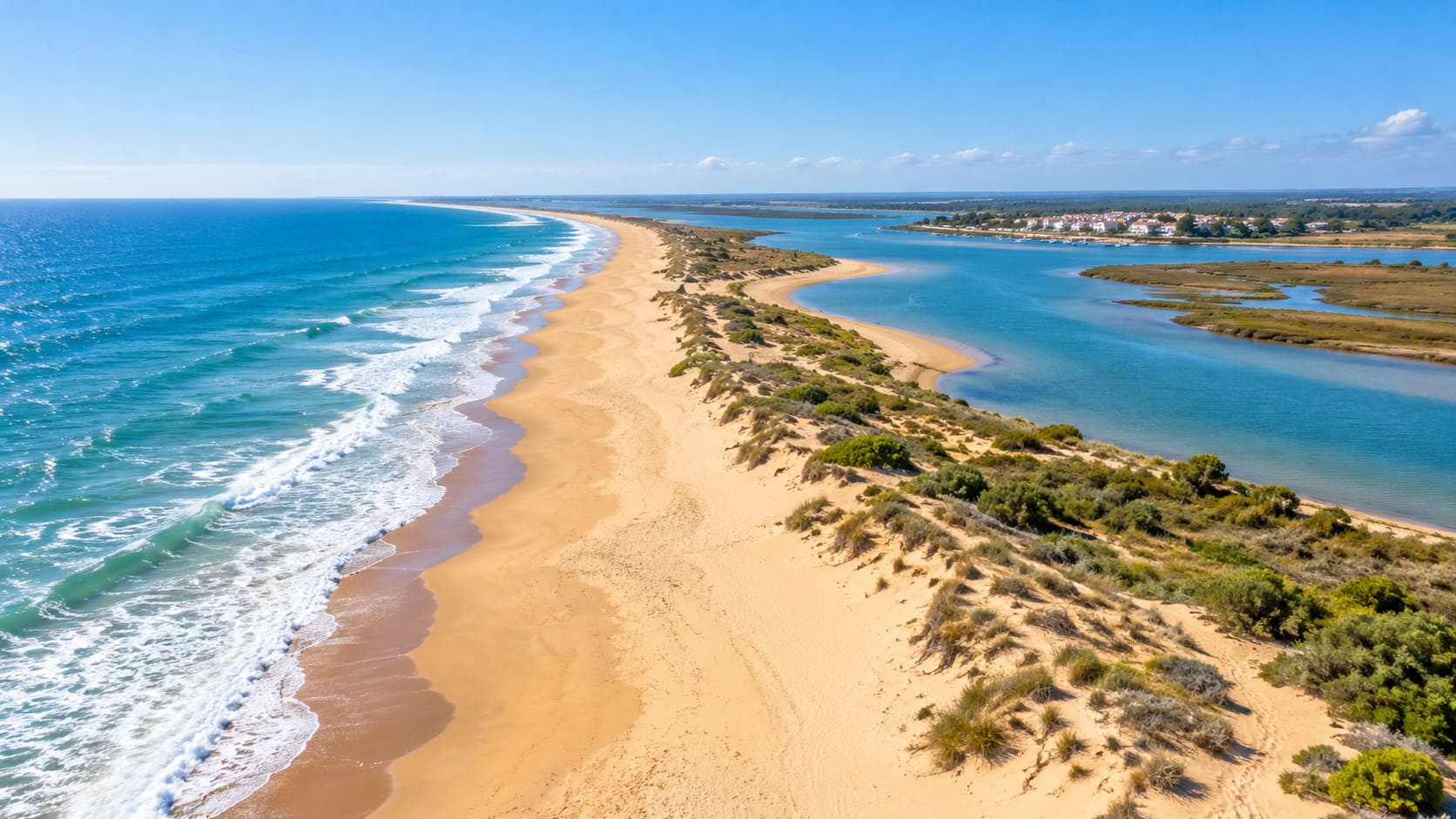
The the beaches of El Rompido, on Huelva’s Costa de la Luz, offer an unusual combination of landscapes: sandy beaches stretching out towards the Atlantic Ocean, small beaches alongside the River Piedras, pine forests, dunes and protected natural areas. Just a few kilometres away, you can go from a beach near the fishing village to another surrounded by nature and free from large housing developments.
One of the main attractions of this part of Cartaya is the El Rompido Arrow, a vast sandbank separating the Piedras River estuary from the Atlantic. But it is not the only option for enjoying the coast. The beaches of San Miguel, Caño de la Culata and Nuevo Portil also offer different atmospheres and ways to enjoy the Huelva coastline.
In this guide, we take a look at the main beaches in El Rompido and the surrounding area, their features, how to get there, and what you should bear in mind before planning a day by the sea.
The beaches of El Rompido: where they are and what makes them special
El Rompido is part of the municipality of Cartaya and is situated next to the mouth of the River Piedras, in the province of Huelva. Its geographical location explains much of the variation between the beaches in the area.
On the one hand, there are the inland beaches, facing the estuary, where the landscape is characterised by boats, sandbanks and the tides. On the other hand, there are the sandy beaches opening out onto the Atlantic, with greater exposure to the waves and expanses of sand that form part of the characteristic landscape of the Costa de la Luz.
Between these two areas lies the Flecha de El Rompido, a natural formation stretching for more than 12 kilometres, which forms part of the Marismas del Río Piedras y Flecha del Rompido Nature Reserve.
This diversity means you can choose between beaches close to urban areas, beaches that are relatively easy to access, and natural sandy beaches where you need to plan your visit more carefully.
If you’d also like to explore the village, its lighthouses, its maritime heritage and other places of interest, you can check out our guide to Things to see and do in El Rompido.
El Rompido’s town beach: next to the fishing village
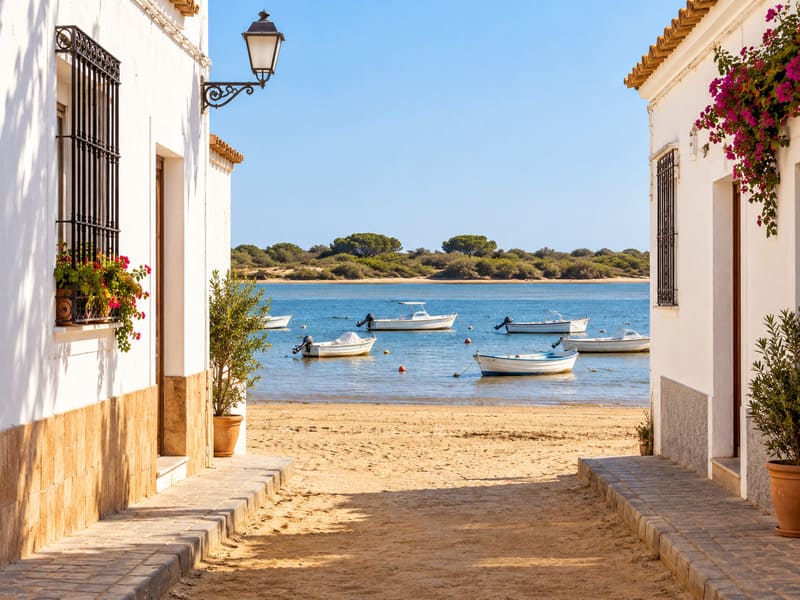
The El Rompido beach It is situated next to the town centre, on the banks of the River Piedras. Its main feature is that it does not face the ocean directly, but rather the waters of the estuary, with views of the boats and La Flecha.
This beach is particularly closely linked to the town’s maritime atmosphere. Its proximity to the seafront promenade means you can combine a visit to the beach with a stroll through the traditional streets or a meal at one of the local eateries.
The landscape changes considerably with the tides. When the water level drops, sandbanks and other parts of the estuary are exposed, revealing a different view of the beach.
Although the area is more sheltered from ocean swells, it is important to be aware of currents, tides and local advice before going for a swim.
Why visit the village beach?
Its main advantage is its location. There’s no need to travel to another town or take a boat to get to the shore and enjoy the scenery.
It’s an interesting option for those who want to explore El Rompido without spending the whole day just on the beach. It also gives you the chance to watch the boats going about their business and discover the town’s historical connection with the River Piedras.
La Flecha Beach in El Rompido: nature by the Atlantic
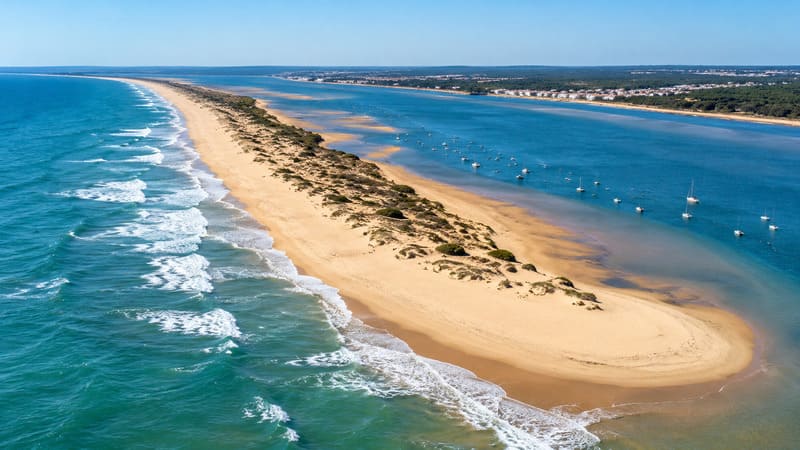
The La Flecha beach in El Rompido It is one of the great natural attractions in this part of Huelva.
La Flecha is a long sandbank formed by the action of sea currents, tides and sediment transport. Its presence creates two distinct environments: the inner side, facing the River Piedras, and the outer side, opening out onto the Atlantic Ocean.
The Atlantic coast is notable for its extensive sandy beaches and its landscape of dunes and coastal vegetation. Unlike the developed beaches, much of this area retains its natural character and forms part of a protected area.
It is particularly appealing to those looking to enjoy sweeping coastal views, walk along the seashore and discover one of Andalusia’s most unique coastal ecosystems.
How to get to La Flecha in El Rompido
One of the most common ways to get there from El Rompido is to use the boat services that cross the River Piedras.
The route takes you to specific points along the sand dunes, from where you can continue on foot to the designated beach areas.
Transport services may vary depending on the time of year, weather conditions and sea conditions. Therefore, before planning your visit, it is advisable to check the departure points, timetables and the last return service.
It is also advisable to bring water, sun cream and everything you need for the day, as you shouldn’t expect to find the same facilities as on a town beach.
Nueva Umbría Beach: a vast natural stretch of sand
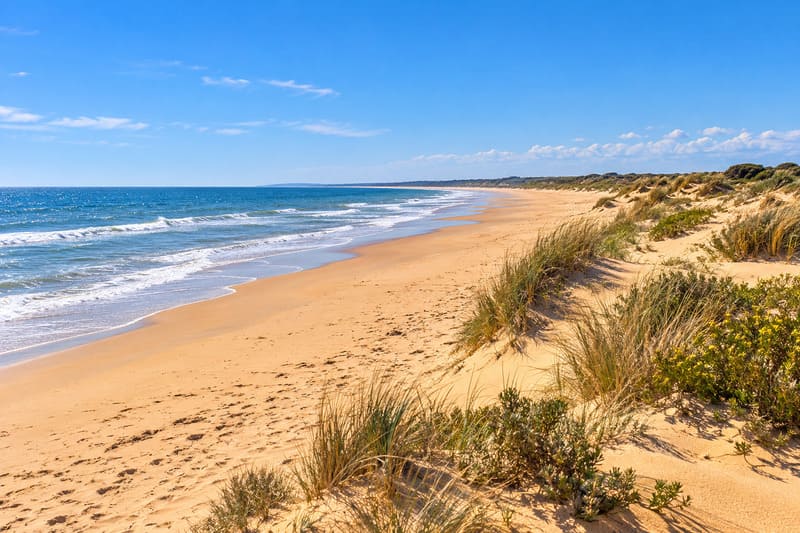
The Nueva Umbría beach It is situated in the vicinity of the El Rompido sand spit and is associated with the extensive sandy beaches on its Atlantic side.
It is known for its natural landscape, characterised by sand, dunes and the absence of large buildings along much of the coastline.
Nueva Umbría is particularly appealing to those who prefer open spaces and wish to spend the day surrounded by nature. The vastness of the beach allows visitors to enjoy long walks and take in the Atlantic scenery of this part of Huelva.
Some areas of Nueva Umbría are also known for naturism, although it is advisable to find out about the customs and the usual areas before visiting.
What sets Nueva Umbría apart from the urban beach at El Rompido?
The main difference is the setting. Whilst the town beach is situated next to the village and faces the estuary, Nueva Umbría forms part of the Atlantic coastline of La Flecha.
This means there are differences in the landscape, exposure to waves and ease of access. When planning a visit to Nueva Umbría, it is advisable to make more careful arrangements regarding transport, equipment and weather conditions.
La Flecha and Nueva Umbría should not be regarded as two entirely separate geographical destinations, but rather as names associated with this vast sandy stretch and its various beach sections.
San Miguel Beach: tranquillity and coastal scenery
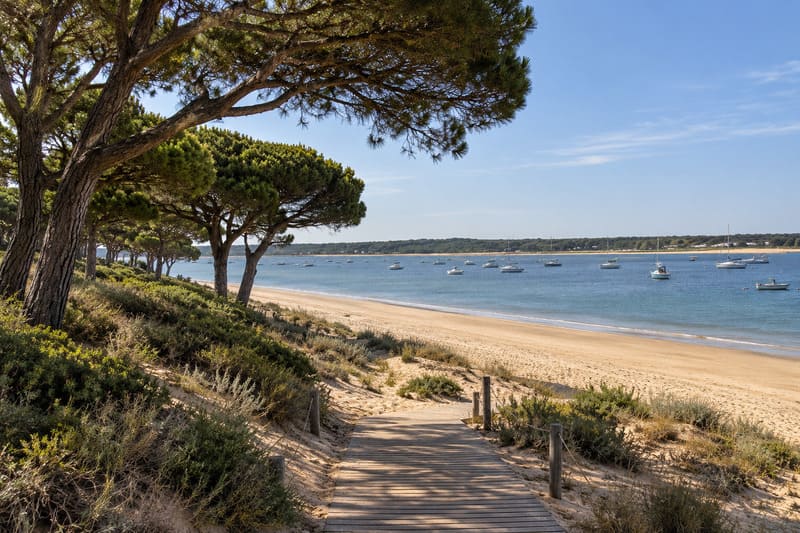
The San Miguel beach It is situated near El Rompido and is another option for enjoying the Cartaya coastline.
Its surroundings combine sand, coastal vegetation and areas of pine forest. In contrast to the atmosphere of the town centre, this area is characterised by its natural spaces and a landscape with fewer buildings.
This beach is linked to the area around the River Piedras and the coastal areas to the west of the village. Nearby, there are spots from which to admire the river mouth and the landscape of La Flecha.
San Miguel beach is a great option for those who wish to round off a visit to El Rompido with a day by the sea or a stroll through the countryside.
Access to San Miguel beach
The area can be reached by road from El Rompido, using the designated access routes.
The area also includes the district known as LARENA, which is mentioned in various local guidebooks as one of the spots from which you can enjoy the beach and access seasonal facilities.
Before setting off, it is a good idea to check the available parking areas and the conditions of the facilities, particularly outside the summer months.
Caño de la Culata Beach: dunes and pine forests
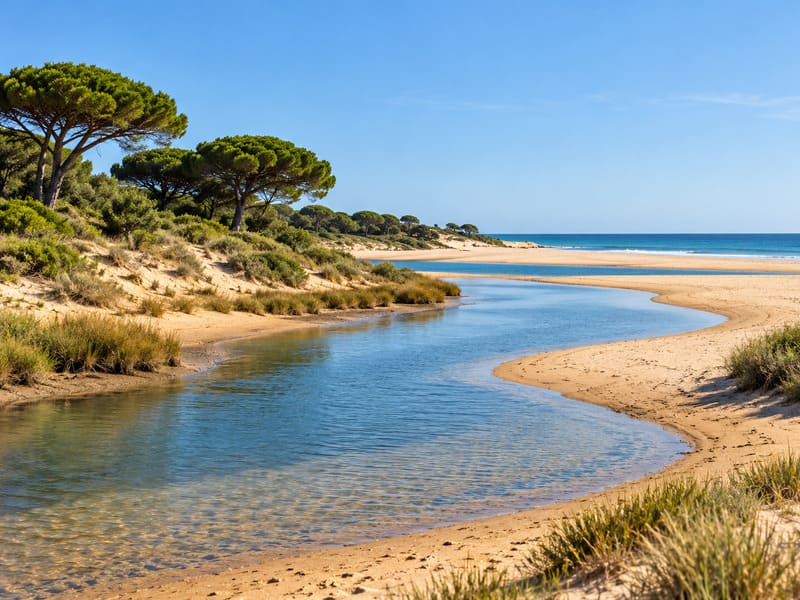
The Caño de la Culata beach, situated on the Cartaya coastline, is notable for its combination of sand, dunes and Mediterranean vegetation.
Its landscape is a prime example of how pine forests and dune systems form part of the natural identity of the Huelva coast.
The name of this beach refers to the ‘caños’, ancient watercourses or inlets linked to the shape of the coastline.
The area offers an alternative for those looking for a beach accessible by road, but who wish to remain in touch with a coastal landscape where nature plays an important role.
There are areas nearby used for car parking and tourist services, which may be open during the summer season.
What to bear in mind before visiting Caño de la Culata
The availability of parking and facilities may vary throughout the year, particularly between the high season and the months with less tourist activity.
It is also advisable to use the designated access points to protect the dunes and vegetation. These ecosystems are particularly sensitive to traffic off the established paths.
For those who enjoy walking by the sea, the area offers views of sandy beaches and coastal vegetation typical of this part of Andalusia.
Nuevo Portil Beach: nature and comfort
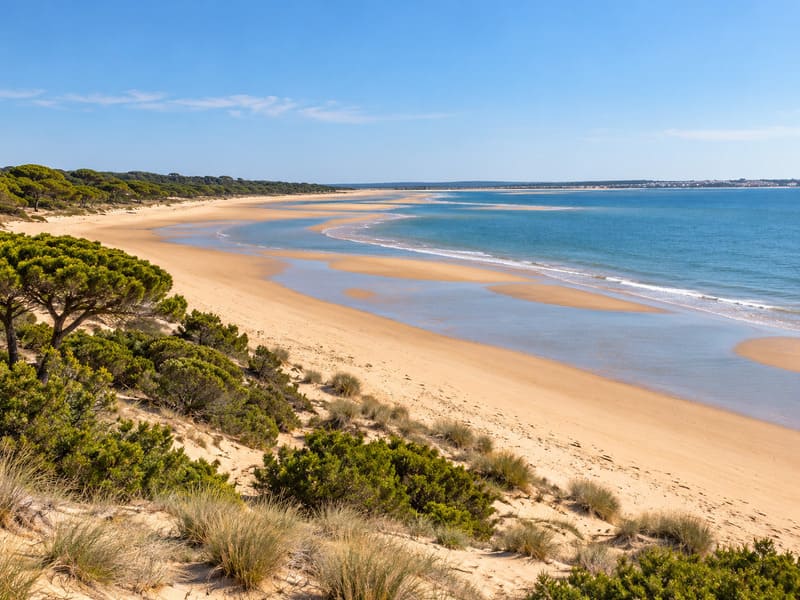
The Nuevo Portil beach It is another of the best-known spots along the Cartaya coastline, a short distance from El Rompido.
Its landscape combines stretches of sand, pine forests and built-up areas close to the coast. It is an attractive option for those who wish to enjoy the natural surroundings without straying too far from tourist facilities.
The Nuevo Portil area is both a residential and holiday destination, which is why during the summer months it has a different atmosphere to that of the natural sandy beaches of La Flecha.
Its location means you can round off a day at the beach with walks in the surrounding area and visits to nearby towns.
Depending on the access point, there may be areas with restaurants and other seasonal services.
Nuevo Portil and El Portil: are they the same thing?
Although their names are similar and they are both part of the same stretch of coastline, Nuevo Portil and El Portil are not exactly the same place.
Nuevo Portil is part of the municipality of Cartaya, whilst El Portil is part of Punta Umbría.
Both areas share a coastal setting of beaches, pine forests and residential estates, which is why they are often mentioned together in tourist guides to Huelva.
How to get to the beaches at El Rompido
How you get there depends mainly on which beach you want to visit.
The beaches situated next to the town centre or in the areas of San Miguel, Caño de la Culata and Nuevo Portil are linked by road and can be accessed from their respective surrounding areas.
On the other hand, to get from the village to the Atlantic sandy beaches of La Flecha de El Rompido, the most common option is to take a boat.
Take the ferry to La Flecha in El Rompido
The boat service is one of the most distinctive features of a visit to La Flecha.
Before using it, it is important to check where boarding takes place, which part of La Flecha it serves, and what the journey conditions are.
Not all services necessarily follow the same route or operate all year round.
It is also essential to check the return timetable, as your time at the beach will depend on the availability of transport.
Car park and access routes
In areas accessible by road, it is advisable to use only authorised parking areas.
During the summer, the number of places available may be more limited due to the high number of visitors.
On natural beaches, access on foot must be via the authorised routes, avoiding crossing dunes or areas of protected vegetation.
Which beach to choose in El Rompido depending on the type of visit
Not all the beaches in El Rompido offer the same experience. So, before you set off, it’s a good idea to decide whether you’d prefer an urban setting, a natural beach or an area with nearby facilities.
| Beach | Key feature | Recommended for |
|---|---|---|
| El Rompido town beach | Next to the village and the estuary | Walks and short visits |
| El Rompido Arrow | A large, protected sandy area | Nature and the Atlantic landscape |
| New Umbria | La Flecha Natural Sandy Beach | Peace and quiet and long walks |
| San Miguel | Coastal setting with vegetation | Relaxation and nature |
| Caño de la Culata | Dunes and pine forests | A day at the beach in a natural setting |
| New Portil | Beach near a residential area | Beach with nearby facilities |
These differences also make it easier to plan a stay of several days. You could spend one day exploring the beaches near the village and another visiting the sandy shores of La Flecha, provided that access conditions allow.
If you’d like to extend your tour of the province, you can take a look at our selection of the best beaches in Huelva, where you’ll find other destinations along the Costa de la Luz.
Tips for visiting the beaches at El Rompido
There are various ways to enjoy the beaches in this part of Huelva, but there are a few things worth bearing in mind.
Tides, currents and sea conditions
The presence of the River Piedras and the Atlantic Ocean means that conditions vary from beach to beach.
An area sheltered from the swell is not necessarily free from currents. Similarly, sandy areas open to the Atlantic may experience changes in sea conditions.
Before going for a swim, please take note of the signs and the safety advice provided.
Services and the summer season
Tourist activity tends to be higher during the summer months. However, not all beaches offer the same facilities, and some establishments are only open at certain times of the year.
It is advisable to check in advance the availability of river transport, toilets, security, facilities and other services that may be required.
Respect for the natural environment
La Flecha in El Rompido and the Piedras River marshes form part of a protected natural area.
Please avoid entering restricted areas, walking through the dunes outside the designated paths, or leaving rubbish on the sand.
The conservation of these landscapes also depends on visitors behaving responsibly.
Visiting the beaches of El Rompido in a motorhome
For those travelling by motorhome or campervan, the beaches at El Rompido can form part of a wider tour of Huelva’s western coast.
One of the advantages of this way of travelling is the opportunity to organise day trips to different towns and beaches during the same holiday, without having to constantly change accommodation.
It is important to distinguish between authorised parking and camping or staying overnight, and to check the regulations applicable in each local authority. Areas near beaches and protected areas may have specific restrictions.
At Camper Park Playas de Luz, our motorhome site in Huelva, situated in Pozo del Camino, between Isla Cristina and Ayamonte, is the perfect base from which to explore the various destinations along the Costa de la Luz.
From there, you can organise trips to El Rompido and other parts of the Huelva coastline, combining days at the beach with visits to the province’s villages and natural areas.
If you’re planning a holiday in this part of Andalusia, the beaches at El Rompido are one of the options you could include in your itinerary.
Frequently asked questions about the beaches at El Rompido
What are the main beaches in El Rompido?
Among the best-known are the town beach at El Rompido, La Flecha beach and Nueva Umbría. Other notable beaches in the surrounding area include San Miguel, Caño de la Culata and Nuevo Portil.
How do you get to La Flecha beach in El Rompido?
From the village, you can use the boat service that crosses the River Piedras to certain points on La Flecha. It is advisable to check timetables, departure times and operating conditions before planning your visit.
What is the difference between La Flecha in El Rompido and Nueva Umbría?
La Flecha is the large sandbank situated between the River Piedras and the Atlantic. Nueva Umbría is one of the beaches associated with this coastal system, particularly renowned for its unspoilt natural beauty.
Are there any nudist beaches in El Rompido?
Yes. Certain areas of Nueva Umbría are known for naturism. It is advisable to check local information on the usual areas and to respect local customs.
Which beach in El Rompido is the easiest to get to?
The town beach is situated right next to the town centre. San Miguel, Caño de la Culata and Nuevo Portil are also accessible by road, whilst a visit to La Flecha from El Rompido usually requires a boat trip.
Can you visit the beaches at El Rompido outside the summer months?
Yes. You can enjoy the local area through walks and outdoor activities at different times of the year. However, beach facilities and transport services may be limited outside the tourist season.
Where can you stay in a motorhome when visiting El Rompido?
Camper Park Playas de Luz is situated in Pozo del Camino, between Isla Cristina and Ayamonte. Its location on the western coast of Huelva makes it ideal for organising day trips to El Rompido and other nearby destinations.
Discover the beaches of El Rompido and the Costa de la Luz
The beaches of El Rompido offer some of the most characteristic scenery along the Huelva coastline. From the small beach next to the fishing village to the vast sandy shores of La Flecha, each area offers a different way to enjoy the coast.
The combination of the River Piedras, the dunes, the pine forests and the Atlantic Ocean makes this area a particularly attractive destination for those looking to combine a beach holiday with nature.
And if you have a few days to spare, you can extend your trip to other parts of Huelva, discovering new beaches and towns along the Costa de la Luz at your own pace.
 English
 Spanish
 French
 German
 Dutch