

Birdwatching by motorhome in Huelva: guide to discover Isla Cristina and surroundings from Camper Park Playas de Luz
Birds, motorhomes and the pleasure of travelling leisurely
If you practise birdwatching and are planning your next motorhome tour in Spain, you've probably already heard of Doñana, the Ebro Delta or the Aiguamolls Natural Park. But there is a corner on the western coast of Andalusia that many have not yet discovered... and which surprises those who visit it: Isla Cristina, in the province of Huelva.
Between marshes, estuaries and salt marshes, Isla Cristina offers an exceptional biodiversity that makes this corner of southern Spain a privileged destination for birdwatching. Flamingos, spoonbills, waders and wintering birds of prey can be seen in an accessible and peaceful environment, perfect for a leisurely stroll in direct contact with nature.
And if you do it on wheels, in your own motorhome, camper or caravan, you can move freely, stop where the light is best and let yourself be surprised by the flight of the flamingos at sunset or the coming and going of the storks at dawn.
This article is intended to help you plan your trip with useful and up-to-date information:
- what species you can see depending on the season,
- which routes are accessible from the area,
- and why Camper Park Playas de Luz is one of the best starting points to explore the marshes of Huelva calmly, without overcrowding and with all the comfort.
Your next lifer - that species you see for the first time and never forget - may be waiting for you just a few metres from your plot.
Why is Huelva, in southern Spain, a paradise for birdwatching?
Huelva is one of the best kept secrets of European birdwatching. Compared to better known areas such as Doñana, its western coast - from Isla Cristina to the Odiel marshes - is an ideal complement: less crowded, equally rich in biodiversity and with accessible routes for all levels.
According to specialised sources, more than 360 species of birds can be observed in the province of Huelva throughout the year. This is a particularly significant figure within the European context, bearing in mind that around 500-600 are recorded throughout the continent, depending on the criteria used.
With the confluence of migratory routes, breeding and wintering areas, Huelva is a real magnet for birds... and for those who enjoy watching them. Its mild climate even in winter, the diversity of habitats within a few kilometres - marshes, salt marshes, marshes, pine forests and dunes - and the tranquillity of its routes make this southern strip of land a paradise for motorhomers who want to continue travelling without cold, without crowds and with many hours of daylight all year round.
Isla Cristina: marshes, star species and slow birdwatching
Isla Cristina is known for its fishing tradition, but it is also a surprisingly privileged destination for birdwatching. Surrounded by marshes and salt marshes and crossed by the Vía Verde del Litoral, this area combines diverse habitats and excellent accessibility for a leisurely stroll.
Here we show you the main areas of ornithological interest and the most representative species that you can see in each one. Whether you have a day or a week, this environment offers you multiple options to connect with nature.
Key areas for birdwatching in Isla Cristina
From Camper Park Playas de Luz you can easily access the main observation points. Some areas are only a few minutes away on foot or by bicycle (available in the area itself), and others are only a few kilometres away by car. The whole environment offers very varied habitats within short distances: tidal marshes, active salt marshes, estuaries, dunes and pine forests.
Marshes of Isla Cristina:
The Isla Cristina Marshes are part of a Natural Site declared a Special Protection Area for Birds (SPA) and have a signposted Ornithological Route, with information panels and more than 140 registered species. It is one of the most complete places in the province for birdwatching during passage, breeding and wintering.
Sectoral highlights:
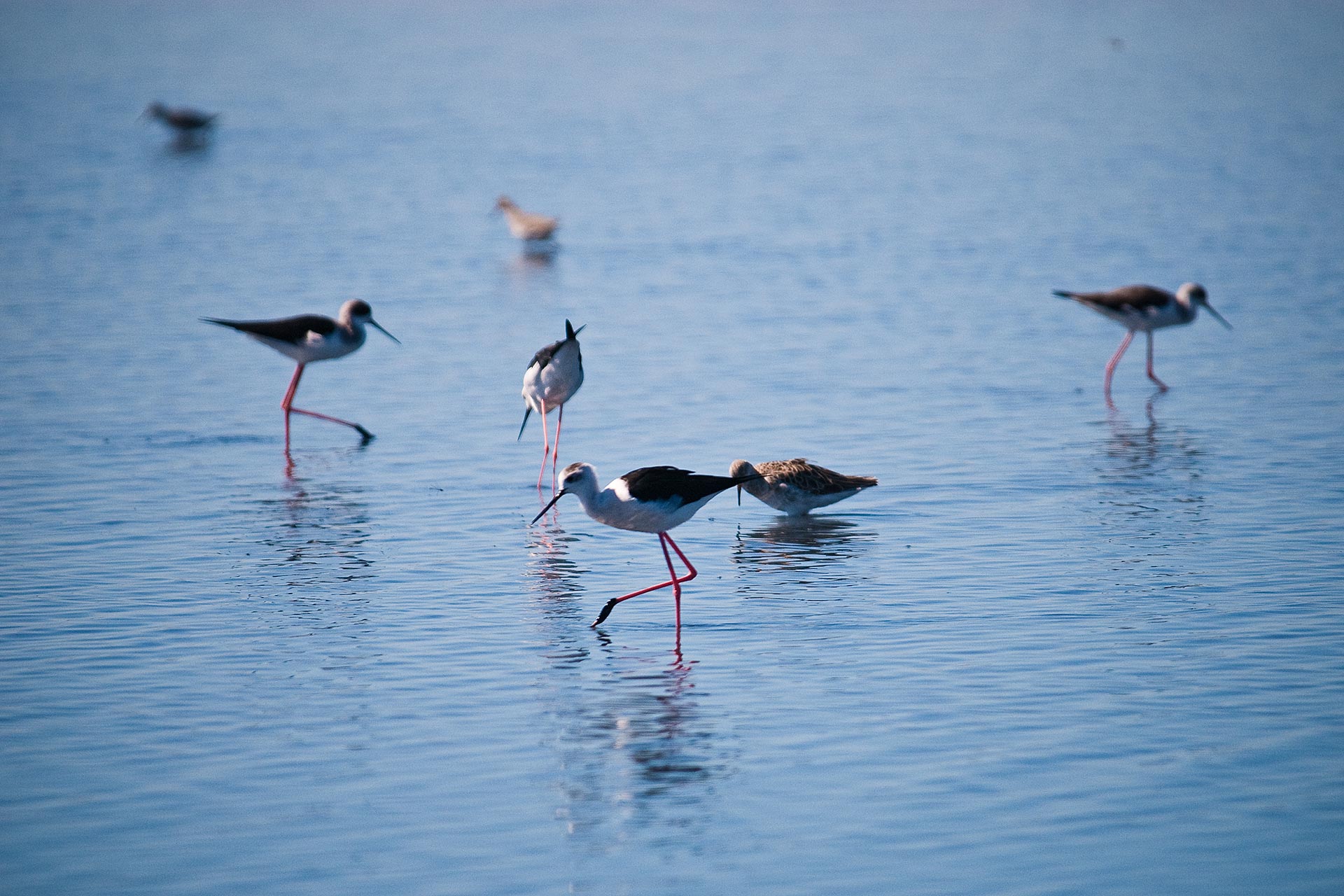
- Salinas del Duque: where it is common to see flamingos, spoonbills, avocets, stilts and many waders in the shallow water.
- Mareal El Pintado Mill: interpretation centre with access to the surroundings and views of the marshes.
- Via Verde del Litoral (EuroVelo1): The former railway track has been converted into a cycle touring route that crosses the marshes from west to east, excellent for sightseeing within a few metres of the area. This route is part of the EuroVelo 1 route, one of the major European cycle routes, making it an added attraction for cycle travellers.
- Laguna del Prado: next to the town of La Redondela. Ideal for birdwatching in a more enclosed and peaceful environment. Easily accessible signposted path.
More information: Isla Cristina Town Council - Parajes Naturales and the Greenways Network.
Star birds you can see in this area
The area of Isla Cristina is especially appreciated by those who are looking for birdwatching without physical complications or technical routes. Here is a selection of species that are visible and valued by both beginners and experienced birders:
- Easy to identify and very photogenic: flamingos, spoonbills, stilts, avocets, red-billed guillemots and bee-eaters (in spring passage).
- Marshland-associated raptors: osprey (in winter) and marsh harrier.
- Small waders and terns: sandpipers (various passage and wetland species), curlews and terns.
All this in an environment that invites slow birdwatching: no rush, no pressure to "mark species", with time to enjoy the landscape, observe from the shade of a pine forest or have breakfast with binoculars from your own plot.
What can you see depending on the time of year?
Based on the Guide to Birdwatching in the Province of Huelva (Diputación de Huelva) and other official sources, this is an indicative summary of what you can see at each time of year.
Because birdwatching in Isla Cristina is not just a matter of luck: each season brings with it different species and unique moments. If you plan your trip with these tips, you will be able to get more out of your outings.
Winter (November - February)
This is one of the best times of the year to visit the marshes. The wintering birds arrive in large groups and are easily spotted, especially at dawn or at low tide.
- What you can see: Common flamingos feed in shallow waters and spoonbills move around the estuaries. Various herons and egrets take advantage of the spillways and lagoons, while birds such as ospreys use the area as a resting area. In addition, depending on the tide and resources, mixed flocks of waders such as sandpipers and sandpipers can be seen exploring the shores.
- Recommendation: The Ecomuseum Molino Mareal El Pintado serves as an interpretation centre on the marshes and is located in the middle of the natural environment, from where there are wide views of the wetlands.
Spring (March - May)
Migratory passage and breeding season. The landscape is filled with colour, song and movement. The birds arrive from Africa to breed in the marshes and pine forests.
- What you can see: Bee-eaters roam the nearby reed beds, purple herons breed in the wetland and elegant avocets and stilts feed in the shallows. In addition, various waders pass through the area on their way to breeding quarters further north, and species such as Little Terns can be seen for part of the season, offering a spring rich in sightings and song.
- Recommendation: Get up early and cycle along the Litoral Greenway. The early hours of the day are ideal for watching courtship and singing, especially in open areas such as the salt marshes or by the estuaries.
Summer (June - August)
The days are longer and the landscape may seem quieter, but some resident species are still active, especially in wet and shaded areas.
- What you can see: Although this is not the time of greatest migratory movements, the marshes of Isla Cristina still offer interesting sightings. Along the estuary and salt marshes it is possible to see common flamingos and several species of gulls and terns that use these spaces to feed and rest. The shallow waters and wet edges continue to attract seabirds and shorebirds.
- Recommendation: Sunrise or sunset walks are usually the best times to observe the activity, with milder temperatures. If you go out during the day, take water, a hat and sunscreen.
Autumn (September - November)
The change of season marks a new cycle in the marshes. Autumn is a key time for migration: many European birds stop here before continuing their journey south.
- What you can see: Whimbrels, spoonbills, cormorants and passing waders use the shallow water areas to feed and rest. There are also frequent sightings of migratory birds of prey such as the marsh harrier. It is a very grateful season for observation, with soft light and a great diversity of species.
- Recommendation: In autumn, routes such as the Salinas del Duque, the Salinas del Alemán or the sections of the Vía Verde near the marshes are particularly productive. Take binoculars, a light jacket and, if you can, get up early: the early hours of the day are the most active.
Did you know that...?
If you stay at Camper Park Playas de Luz, you can rent binoculars and telescopes with tripod directly from reception. You will also receive a bird guide specifically designed for this area, with maps, recommendations and information sheets to help you get the most out of your birdwatching days. A simple and practical way to discover the environment, even if it is your first time birdwatching in Huelva.
Camper Park Playas de Luz: ideal base for birders on wheels
Your goal may be to relax with a coffee at sunrise while watching the spoonbills fly over the marshes, use your binoculars for a leisurely walk along the Greenway or take advantage of each day to rediscover your favourite routes in the light of each season.
Whatever your plan, Camper Park Playas de Luz is a comfortable, practical and well-located base to enjoy birdwatching at your own pace. A space designed for you to live your hobby with peace, freedom and maximum comfort.
You have spacious pitches, toilets that are always clean, laundry and a swimming pool to come back from your routes and really relax.
In addition, we have:
- Privileged location: between marshes, footpaths, village and shopping areas. You can walk, cycle or go on full day excursions.
The Litoral Greenway, which forms part of the international EuroVelo 1 route, starts practically on the doorstep of the area. It's the perfect way to get started in observation without moving your vehicle, crossing marshes and salt marshes along a flat and accessible route that is also ideal for bicycles.
- Services designed for long stays: electricity, stable wifi, rest areas, pet-friendly, emptying area and laundry.
- Designed for birders: Possibility of renting binoculars and telescope, own observation guide prepared for our visitors and staff knowledgeable about the environment.
- Quiet and respectful environment: ideal for those who value calm, a leisurely pace and direct contact with nature.
Whether it's your first contact with birdwatching or you've been touring Europe for years, here you'll find the perfect balance between wilderness and comfort.
And all this... with a mild climate, many hours of daylight and marshes just a few minutes away from your plot.
I want to live the experience >>
Nearby routes from Camper Park Playas de Luz
One of the advantages of staying at Camper Park Playas de Luz is that, without long journeys, you can discover other first class ornithological sites. From marshes declared a Biosphere Reserve to protected areas in Portugal, the variety of routes and landscapes is enormous.
Here are some suggestions:
Paraje Natural Marismas del Odiel: birdwatching route in Huelva
Just 35 km from Camper Park Playas de Luz, the Marismas del Odiel Nature Reserve is one of the ornithological jewels of the southwest of the peninsula. Declared a Biosphere Reserve by UNESCO, this protected area covers more than 7,000 hectares of marshes, estuaries, salt marshes, lagoons and pine forests, and is considered one of the most important wetlands in Western Europe.
This enclave is home to the largest breeding colony of spoonbills on the continent and serves as a key passage, breeding and wintering area for numerous species. Resident and migratory birds converge here, guaranteeing a variety of sightings throughout the year.
Species of note: Eurasian Oystercatcher, Eurasian Oystercatcher, Little Dipper, Purple Heron, Red Kite and the rare Marbled Teal, among many others.
Accessibility: It has signposted trails, observatories and the Anastasio Senra Visitor Centre, where you can find out about the species present and plan your visit.
Western Doñana: birdwatching near El Rocío
Few areas in Europe arouse as much interest among bird lovers as the Doñana National Park. Just over an hour from Camper Park Playas de Luz you can easily access the western part of the park, based in El Rocío, one of the most spectacular and peaceful gateways to enjoy this unique area declared a Biosphere Reserve.
This environment combines open marshes, riverside forests, meadows and pine forests where birds can be seen all year round. In addition, both the La Rocina Visitor Centre and the area around El Rocío have areas set aside for parking motorhomes (although not for overnight stays), which makes it easy to start the routes directly from there in total comfort.
Two itineraries stand out for their natural value:
- Las Rocinas Trail (4.4 km)
It starts at the La Rocina Visitor Centre and passes through pine woods and riverside forests. Along the route, you will find observatories where you can watch water birds in the temporary lagoons.
Frequent species: Purple Swamphen, Little Egret, Little Egret, Grey Heron and Purple Heron. - Paseo Marismeño (El Rocío - Marisma Madre)
This trail starts at the car park of the Aires de Doñana restaurant, opposite El Rocío, and runs along the shores of the Marisma Madre. A privileged enclave to contemplate birds at rest or in movement over a completely open landscape.
Frequent species: common flamingo, common spoonbill, common stilt, common scoter and, in winter, large concentrations of greylag geese.
Sierra de Huelva: nature and birds of prey
If you fancy combining your marshland experience with mid-mountain landscapes, the Sierra de Aracena y Picos de Aroche Nature Reserve offers trails through chestnut groves, dehesas and Mediterranean forests where you can observe birds that you won't find in coastal environments.
Three routes especially recommended for their ornithological value are:
- Between Cumbres de Enmedio and Cumbres Mayores (GR-48)
- Centenary chestnut trees in Castaño Robledo
- Teuler Mines in Santa Olalla del Cala
Species of note: red kite, booted eagle, griffon vulture, solitary rock thrush, great spotted woodpecker, Iberian yellowhammer, Iberian chiffchaff, blackcap, willow warbler and reed bunting.
If you are interested in including any of these routes in your getaway, you can ask us at reception. There we will guide you with maps, access and recommendations according to the time of year.
Council: All these areas are listed in detail in the free Huelva Birdwatching Guide, published by the Provincial Council. You can download it online to prepare your visit with official data and updated maps.
Laguna de El Portil: birdwatching in one of Huelva's most unique wetlands
About 45 km from the Camper Park Playas de Luz, the Laguna de El Portil is a coastal Nature Reserve located between Punta Umbria and El Portil. Declared a protected area in 1989, this freshwater wetland stands out for its biodiversity and its key role as a staging, breeding and wintering area for numerous species of water birds.
- Habitat: Its environment combines a lagoon system fed by groundwater with a belt of marsh vegetation (reeds, cattails, tamarisk) and coastal pine forests. This ecological richness, together with its proximity to the sea and the dunes of the Atlantic coast, makes it a privileged habitat within the Natura 2000 Network.
- Most frequent species: Great Crested Grebe, Little Grebe, Spoonbill, Common Coot, Mallard, as well as egrets, cormorants and other waders and ducks. During migrations it is also common to see mixed flocks at rest.
The main route can be done on foot along a signposted and accessible path, with several sighting points and natural viewpoints. It is recommended to visit at dawn or dusk to take advantage of the greatest activity.
Ideal as a complement to other birdwatching routes in the province.
Reserva Natural do Sapal de Castro Marim and Vila Real de Santo António: transboundary birdwatching between Spain and Portugal
And finally, less than half an hour away you can be birdwatching... in another country. This Portuguese protected area, just 25 km from the Camper Park, is perfect for a different kind of day out.
- Habitats: salt marshes, estuaries, open wetlands.
- Frequent species: Black-winged Stilt (very abundant and symbol of the reserve), Common Flamingo, White Stork, Little Avocet, Black-tailed Godwit, Red-billed Godwit, Whimbrel and Stone Curlew.
You can easily get there by car or motorhome by crossing the international bridge that connects Ayamonte with Vila Real de Santo António. If you prefer to do the route by bicycle, the best option is to use the river ferry, which connects both towns in a comfortable and safe way for cyclists.
It's an ideal getaway for a variety of species... and birdwatching in two countries from one base.
Check with reception for updated ferry timetables and recommendations to help you plan your route.
What you should bear in mind if you come birdwatching on the west coast of Huelva
These are some frequently asked questions from travellers who combine their passion for birds with the freedom of travelling by motorhome.
If you are organising your trip to Isla Cristina or exploring other ornithological spots in Huelva, here you will find useful information to help you plan your visit.
Do I need previous experience to do birdwatching in Isla Cristina (Huelva)?
No. This is one of the great advantages of the environment: it is accessible, quiet and offers many species visible to the naked eye or with binoculars. At Camper Park Playas de Luz we provide you with the equipment and information to get you started without complications.
What if I already have experience, is it worth it?
No doubt about it. The marshes of Isla Cristina and the surrounding area are home to more than 140 documented species, some of which are of great interest even to experienced birders. In addition, it is an uncrowded environment, with quiet routes and good light conditions all year round. You can also combine your visit with other hotspots such as Marismas del Odiel, Doñana or the Sierra.
What are the easiest birds to see in Huelva if I am a beginner?
In winter and during migratory passages, large or showy species are often seen, which are very grateful to start with.
- Flamingos, spoonbills, grey herons, storks.
- Avocets and waders (sandpipers, plovers, curlews).
Tip: Go early in the morning or in the evening for more activity.
Where to see flamingos in Huelva?
Common flamingos can be seen almost all year round in several wetlands in the province. One of the best places is Isla Cristina, especially in the Salinas del Duque salt flats. They can also be seen in the Marismas del Odiel Nature Reserve and in the area around El Rocío, within the Doñana National Park.
Are migratory birds seen in autumn in Huelva (Andalusia)?
Yes, autumn is one of the best times for birdwatching in Andalusia, especially in the province of Huelva. During this season, thousands of migratory birds use marshes and estuaries as stopovers on their way to Africa. Isla Cristina, Marismas del Odiel and the Marisma Madre de Doñana stand out.
What is the best time of year to see birds in Huelva?
It depends on what you are looking for: every season has its "prize".
- Winter: arrival of overwinterers and large concentrations.
- Spring/Autumn: migration and more variety.
- Summer: less migration, but active residents and youth.
What do I need to start birdwatching in Huelva?
To get started, all you need are binoculars, a bit of curiosity and, if you feel like it, an app to help you identify species by image or sound.
- Binoculars: If you don't have them, you can rent them at Camper Park Playas de Luz.
- Apps to identify birds:
- SEO/BirdLife and BirdNET (very useful to recognise by sighting or sound).
- Merlin Bird ID or eBird if you are already familiar with birdwatching and want to record sightings.
- Guide to the area: In the area we provide you with a specific birdwatching guide, with recommendations adapted to this environment.
- If you want to do it by bike: he Litoral Greenway is part of the European EuroVelo 1 route, an ideal option for comfortable stretches while birdwatching.
Can I book guided or group tours?
Yes, Camper Park Playas de Luz can organise guided tours or group outings with specialised guides. We can help you to arrange trips to the marshes, Doñana, Odiel or Castro Marim, with pick-up in the area and expert accompaniment to maximise your sightings.
Can I birdwatch if I am only staying one night or just passing through?
Yes, with a short walk you can get some interesting sightings, especially in nearby wetlands.
- Choose an easy viewpoint/trail and do it at sunrise or sunset.
- If you stay longer, you will notice changes in light, time and (sometimes) tide.
What other birdwatching routes are there near Isla Cristina to extend the trip?
You have several powerful options less than 90 minutes away, depending on whether you fancy marshland or inland.
- Odiel Marshes.
- El Portil Lagoon.
- Doñana (western area).
- Castro Marim (Portugal).
- Sierra de Huelva (other habitat types and species).
Can I come with my dog?
Yes, Camper Park Playas de Luz is pet-friendly and the environment of marshes, paths and Greenway offers many pleasant walks for you and your pet (always respecting protected areas and local wildlife).
What basic rules should I follow for responsible birdwatching in Huelva?
To make birdwatching a responsible and environmentally friendly activity, bear in mind these recommendations:
- Do not disturb the birds or access their habitats: they may leave the nest if they feel threatened.
- Avoid unnecessary shouting or using loud complaints.
- Observe from marked trails or viewpoints.
- Do not feed birds or use bait.
- It respects vegetation, wildlife and private property.
- Practice sustainable tourism that contributes to the maintenance of these unique spaces.
You can consult the complete guide at reception or ask for guidance from the staff in the area.
Are you already prepared for your next getaway?
Book your pitch at Camper Park Playas de Luz and enjoy birdwatching in one of the most peaceful and surprising places in the south of Spain: the coast of Huelva.
 English
  Spanish
  French
  German
  Dutch
Dutch